Buy cbc.li ?
We are moving the project
cbc.li .
Are you interested in purchasing the domain
cbc.li ?
domain@kv-gmbh.de · 0541-91531010
Buy cbc.li ?
When was your house built?
My house was built in 1985. It is a relatively older house, but it has been well-maintained and renovated over the years to keep it in good condition. The construction and design of the house reflect the style of that time period, with features such as a brick fireplace and large windows. Overall, it has a classic and timeless feel to it. **
When was this house built?
This house was built in 1925. **


Similar search terms for Random-House-Business-Built
Top-Angebote
Products related to Random-House-Business-Built:
-
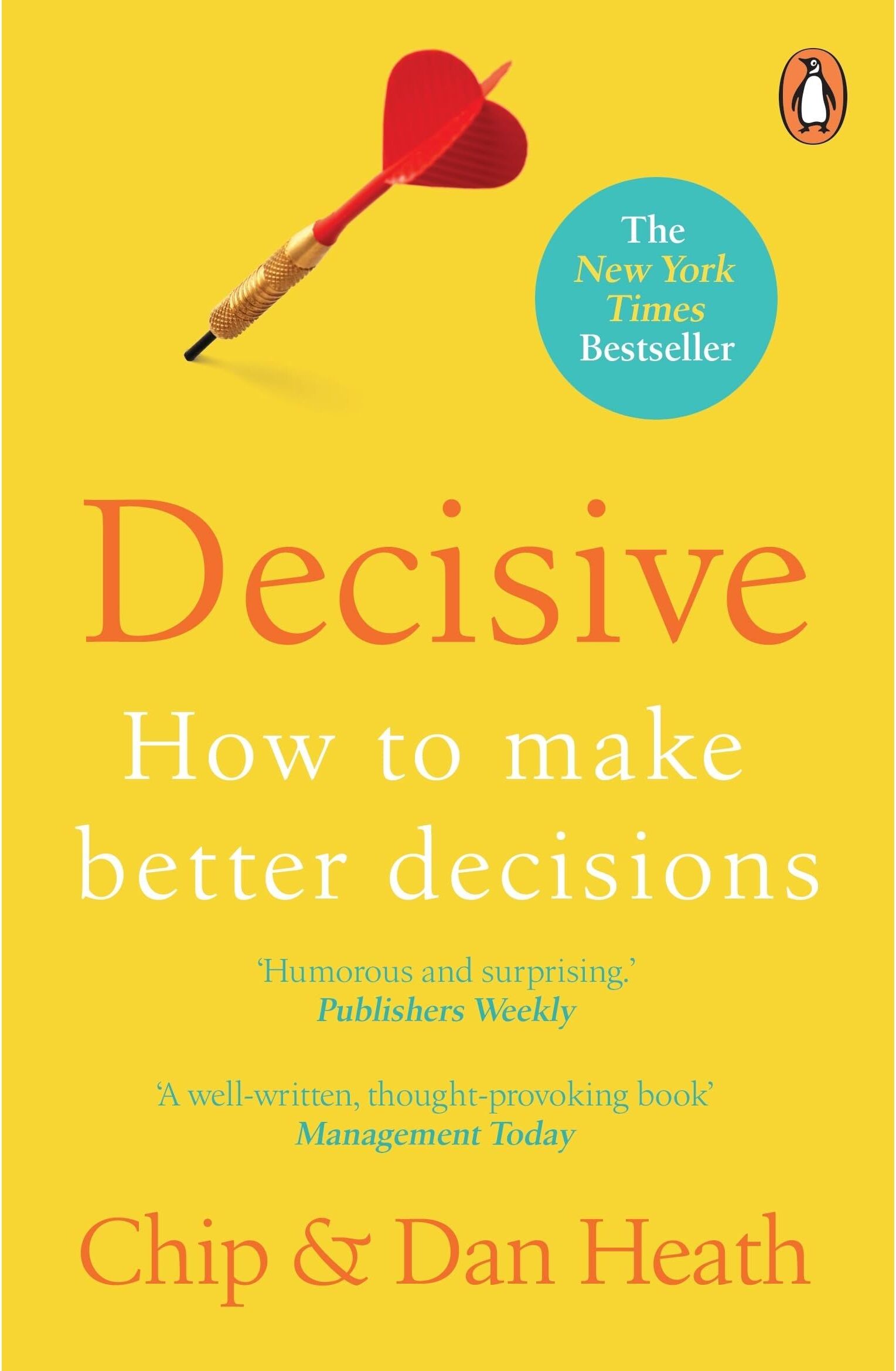
Random House Business Decisive: How to Make Better Decisions by Chip & Dan HeathThe New York Times-bestselling authors of Switch and Made to Stick offer a fascinating tour through the workings of our minds to reveal how to make smarter decisions. Research in psychology has revealed that our decisions are disrupted by an array of biases and irrationalities. We're overconfident. We seek out information that supports us and downplay information that doesn't. We get distracted by short-term emotions. When it comes to making choices, our brains are flawed instruments. So, how can we do better? In Decisive, Chip and Dan Heath draw on cutting-edge psychological research to introduce a four-step process designed to counteract these biases. They reveal how we can stop the cycle of agonizing over our decisions, how can we make group decisions without destructive politics, and how to ensure that we don't overlook precious opportunities to change our course. Along the way, they demonstrate how relatively easy it is to avoid the pitfalls and find the best answers. Written in a compulsively readable style, Decisive takes us on a tour from a rock star's ingenious decision-making trick, to a CEO's disastrous acquisition, to a single question that can often resolve thorny personal decisions, in order to offer fresh strategies and practical tools that will enable you to make better choices. Because the right decision, at the right moment, can make all the difference.9,99 £*Shipping: 2,99 £Secure redirect to the provider
-
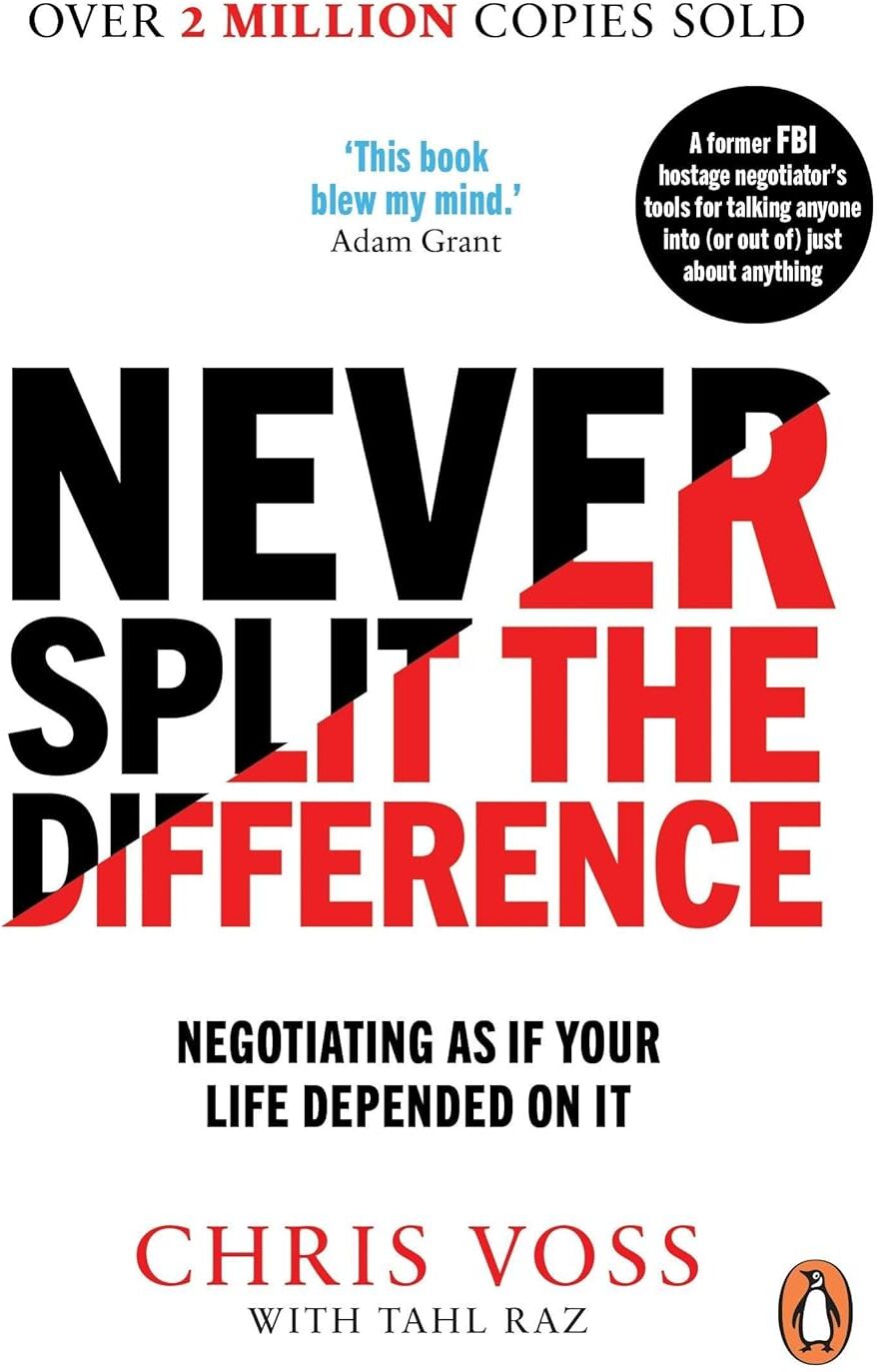
Random House Business Never Split the Difference by Chris Voss - Paperback - FBI Negotiation Skills Bestseller - Business & Self-Help BookNever Split the Difference is a practical guide to negotiation by Chris Voss, a former FBI lead international hostage negotiator. Co-written with Tahl Raz, the book draws on real, high-stakes negotiations with kidnappers, bank robbers, and terrorists to distill nine field-tested principles that anyone can use to gain an edge in business deals, salary talks, family disputes, or everyday bargaining. The book reframes negotiation as a battle of emotional intelligence rather than logic alone. After years policing the streets of Kansas City, Missouri, Chris Voss joined the FBI, where his career as a kidnapping negotiator brought him face-to-face with some of the most dangerous people on earth. This book takes readers inside that world of high-stakes negotiation, revealing the tactics that helped Voss and his colleagues succeed when it mattered most. Written by Chris Voss and Tahl Raz, this non-fiction paperback is published by Random House Business Books.7,99 £*Shipping: 2,99 £Secure redirect to the provider
-
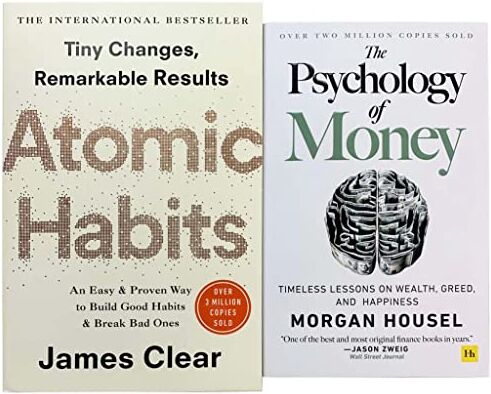
Random House Business/Harriman House ltd Atomic Habits & The Psychology of Money – 2 Books Collection Set Personal Growth, Wealth & Mindset BestsellersAtomic Habits People think that when you want to change your life, you need to think big. But world-renowned habits expert James Clear has discovered another way. He knows that real change comes from the compound effect of hundreds of small decisions: doing two push-ups a day, waking up five minutes early, or holding a single short phone call. He calls them atomic habits. In this ground-breaking book, Clears reveals exactly how these minuscule changes can grow into such life-altering outcomes. He uncovers a handful of simple life hacks (the forgotten art of Habit Stacking, the unexpected power of the Two Minute Rule, or the trick to entering the Goldilocks Zone), and delves into cutting-edge psychology and neuroscience to explain why they matter. Along the way, he tells inspiring stories of Olympic gold medalists, leading CEOs, and distinguished scientists who have used the science of tiny habits to stay productive, motivated, and happy. The Psychology of Money Doing well with money isn't necessarily about what you know. It's about how you behave. And behaviour is hard to teach, even to really smart people. Money investing, personal finance, and business decisions is typically taught as a math-based field, where data and formulas tell us exactly what to do. But in the real world people don't make financial decisions on a spreadsheet. They make them at the dinner table, or in a meeting room, where personal history, your own unique view of the world, ego, pride, marketing, and odd incentives are scrambled together. In The Psychology of Money, award-winning author Morgan Housel shares 19 short stories exploring the strange ways people think about money and teaches you how to make better sense of one of life's most important topics.15,99 £*Shipping: 2,99 £Secure redirect to the provider

-
How is the dream house built?
The dream house is built by first creating a detailed plan or blueprint that outlines the design, layout, and features of the house. Once the plan is finalized, the construction process begins with laying the foundation, followed by framing, roofing, and exterior finishing. Interior work such as plumbing, electrical, insulation, and drywall is then completed before finishing touches like flooring, paint, and fixtures are added. The dream house is built with careful attention to detail and quality craftsmanship to ensure it meets the homeowner's vision and expectations. **
-
Where should the house be built?
The house should be built in a location that meets the needs and preferences of the homeowner. Factors to consider include the proximity to schools, workplaces, and amenities, as well as the overall safety and desirability of the neighborhood. Additionally, the natural surroundings and views should be taken into account to ensure a pleasant living environment. Ultimately, the decision on where to build the house should be based on the specific priorities and lifestyle of the homeowner. **
-
How can a business network be built?
A business network can be built by actively engaging with industry peers, attending networking events, and joining professional organizations related to the business's industry. Building relationships with other businesses, suppliers, and customers can also help expand the network. Utilizing social media platforms and online networking tools can further enhance the reach and connections within the business network. Consistently nurturing and maintaining these relationships through communication, collaboration, and mutual support is key to building a strong and reliable business network. **
-
How high can a house be built?
The height of a house that can be built is typically regulated by local building codes and zoning laws. These regulations vary depending on the location and type of property. In general, residential buildings are limited to a certain number of stories or a maximum height in order to ensure safety, aesthetics, and compatibility with the surrounding area. It is important to consult with local authorities and professionals to determine the specific height restrictions for a particular property. **

Which construction company built the White House?
The White House was built by a construction company called Hoban. James Hoban, an Irish-born architect, won a design competition in 1792 to build the White House. Construction began in 1792 and was completed in 1800. The White House has since been expanded and renovated multiple times by various construction companies. **
What can a house be built from?
A house can be built from a variety of materials including wood, concrete, bricks, stones, metal, and glass. The choice of materials depends on factors such as the location, climate, budget, and design preferences. Each material has its own advantages and disadvantages in terms of durability, cost, energy efficiency, and aesthetics. Ultimately, a combination of materials is often used to create a structurally sound and visually appealing home. **
Top-Angebote
Products related to Random-House-Business-Built:
-
Random House Business Good To Great & Built To Last 3 Books Collection Set By Jim Collins - Non Fiction - Mixed FormatTitles in This Set:. Good To Great. Built To Last. Turning the Flywheel Format: Mixed Format. ID: NON-BUS-FC-JC-GTBL-TF Overview:. Secure your organisation's trajectory towards sustained market leadership with this essential collection featuring Jim Collins and his co-authors, bringing together three landmark works that have fundamentally reshaped modern business strategy. This comprehensive volume brings together Good To Great, Built To Last, and Turning the Flywheel, offering a complete blueprint for transforming ambitious enterprises into enduring industry champions. Meticulously researched and distilled into actionable frameworks, these titles move beyond theoretical abstractions to deliver evidence-based insights utilised by CEOs, senior managers, and strategists worldwide. Whether your objective involves accelerating measurable growth, cultivating superior executive leadership, or constructing an institution engineered for generational relevance, this curated library supplies the definitive methodologies for operational excellence. Acquiring this trio ensures immediate access to the foundational texts that redefined how companies approach performance, discipline, and longevity in highly competitive environments. The mixed-format presentation consolidates these powerful educational resources into a unified acquisition, representing the most efficient pathway to absorbing the full spectrum of expert advice on corporate transformation. By uniting these works, the collection bridges the gap between establishing a visionary core identity and executing the daily rigour required to turn that vision into reality, providing decision-makers with a holistic perspective that spans both immediate strategy and infinite-game thinking. Ideally suited for boardroom reference, professional study, or advanced management libraries, this compilation delivers unmatched commercial value through its depth of analysis and practical applicability across diverse sectors. What Makes This Collection Special:. This set distinguishes itself by presenting a synergistic learning journey that few other bundles achieve, connecting the architecture of visionary companies directly to the mechanics of high-performance execution. Where many business collections offer isolated bestsellers, this group is structured to reinforce one another: Built To Last establishes the enduring foundation of culture and ideology; Good To Great exposes the catalysts that propel ordinary results toward extraordinary outcomes; and Turning the Flywheel emphasises the compounding momentum required to sustain superiority once the leap is achieved. Studying these titles in sequence reveals the interconnected pathways between internal alignment and external market dominance. The inclusion of durable hardcover editions alongside accessible formats enhances the collection's versatility, allowing readers to annotate key concepts during deep research sessions or carry lighter references for on-site...99,99 £*Shipping: 0,00 £Secure redirect to the provider
-
Random House Business Decisive: How to Make Better Decisions by Chip & Dan HeathThe New York Times-bestselling authors of Switch and Made to Stick offer a fascinating tour through the workings of our minds to reveal how to make smarter decisions. Research in psychology has revealed that our decisions are disrupted by an array of biases and irrationalities. We're overconfident. We seek out information that supports us and downplay information that doesn't. We get distracted by short-term emotions. When it comes to making choices, our brains are flawed instruments. So, how can we do better? In Decisive, Chip and Dan Heath draw on cutting-edge psychological research to introduce a four-step process designed to counteract these biases. They reveal how we can stop the cycle of agonizing over our decisions, how can we make group decisions without destructive politics, and how to ensure that we don't overlook precious opportunities to change our course. Along the way, they demonstrate how relatively easy it is to avoid the pitfalls and find the best answers. Written in a compulsively readable style, Decisive takes us on a tour from a rock star's ingenious decision-making trick, to a CEO's disastrous acquisition, to a single question that can often resolve thorny personal decisions, in order to offer fresh strategies and practical tools that will enable you to make better choices. Because the right decision, at the right moment, can make all the difference.9,99 £*Shipping: 2,99 £Secure redirect to the provider
-
When was your house built?
My house was built in 1985. It is a relatively older house, but it has been well-maintained and renovated over the years to keep it in good condition. The construction and design of the house reflect the style of that time period, with features such as a brick fireplace and large windows. Overall, it has a classic and timeless feel to it. **
-
When was this house built?
This house was built in 1925. **
-
How is the dream house built?
The dream house is built by first creating a detailed plan or blueprint that outlines the design, layout, and features of the house. Once the plan is finalized, the construction process begins with laying the foundation, followed by framing, roofing, and exterior finishing. Interior work such as plumbing, electrical, insulation, and drywall is then completed before finishing touches like flooring, paint, and fixtures are added. The dream house is built with careful attention to detail and quality craftsmanship to ensure it meets the homeowner's vision and expectations. **
-
Where should the house be built?
The house should be built in a location that meets the needs and preferences of the homeowner. Factors to consider include the proximity to schools, workplaces, and amenities, as well as the overall safety and desirability of the neighborhood. Additionally, the natural surroundings and views should be taken into account to ensure a pleasant living environment. Ultimately, the decision on where to build the house should be based on the specific priorities and lifestyle of the homeowner. **
Similar search terms for Random-House-Business-Built
-
Random House Business Never Split the Difference by Chris Voss - Paperback - FBI Negotiation Skills Bestseller - Business & Self-Help BookNever Split the Difference is a practical guide to negotiation by Chris Voss, a former FBI lead international hostage negotiator. Co-written with Tahl Raz, the book draws on real, high-stakes negotiations with kidnappers, bank robbers, and terrorists to distill nine field-tested principles that anyone can use to gain an edge in business deals, salary talks, family disputes, or everyday bargaining. The book reframes negotiation as a battle of emotional intelligence rather than logic alone. After years policing the streets of Kansas City, Missouri, Chris Voss joined the FBI, where his career as a kidnapping negotiator brought him face-to-face with some of the most dangerous people on earth. This book takes readers inside that world of high-stakes negotiation, revealing the tactics that helped Voss and his colleagues succeed when it mattered most. Written by Chris Voss and Tahl Raz, this non-fiction paperback is published by Random House Business Books.7,99 £*Shipping: 2,99 £Secure redirect to the provider
-
Random House Business/Harriman House ltd Atomic Habits & The Psychology of Money – 2 Books Collection Set Personal Growth, Wealth & Mindset BestsellersAtomic Habits People think that when you want to change your life, you need to think big. But world-renowned habits expert James Clear has discovered another way. He knows that real change comes from the compound effect of hundreds of small decisions: doing two push-ups a day, waking up five minutes early, or holding a single short phone call. He calls them atomic habits. In this ground-breaking book, Clears reveals exactly how these minuscule changes can grow into such life-altering outcomes. He uncovers a handful of simple life hacks (the forgotten art of Habit Stacking, the unexpected power of the Two Minute Rule, or the trick to entering the Goldilocks Zone), and delves into cutting-edge psychology and neuroscience to explain why they matter. Along the way, he tells inspiring stories of Olympic gold medalists, leading CEOs, and distinguished scientists who have used the science of tiny habits to stay productive, motivated, and happy. The Psychology of Money Doing well with money isn't necessarily about what you know. It's about how you behave. And behaviour is hard to teach, even to really smart people. Money investing, personal finance, and business decisions is typically taught as a math-based field, where data and formulas tell us exactly what to do. But in the real world people don't make financial decisions on a spreadsheet. They make them at the dinner table, or in a meeting room, where personal history, your own unique view of the world, ego, pride, marketing, and odd incentives are scrambled together. In The Psychology of Money, award-winning author Morgan Housel shares 19 short stories exploring the strange ways people think about money and teaches you how to make better sense of one of life's most important topics.15,99 £*Shipping: 2,99 £Secure redirect to the provider
-
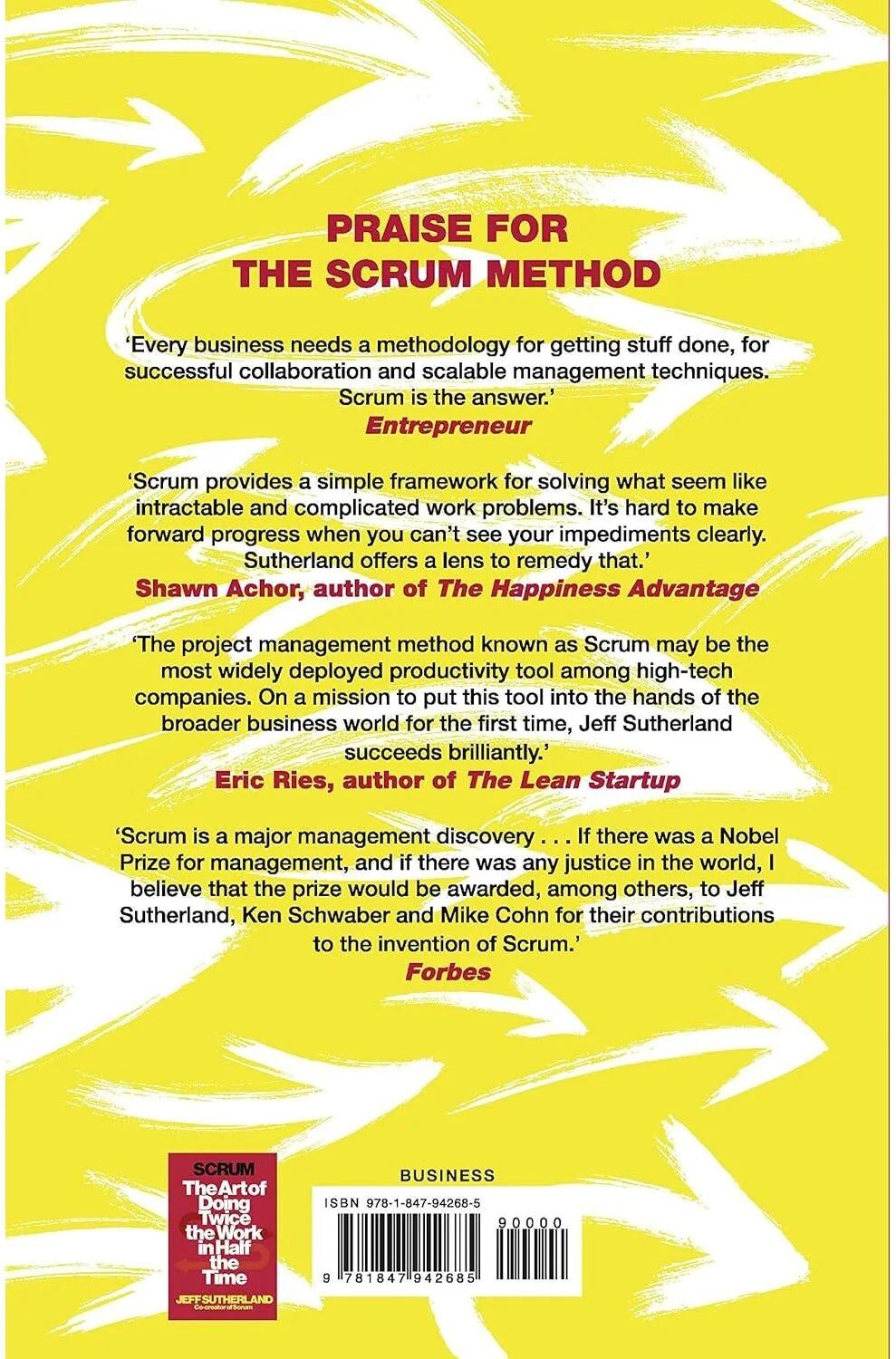
Random House Business The Scrum Fieldbook by J.J. Sutherland - Business & Management Hardback - Faster Performance, Better Results for Teams and LeadersThe Scrum Fieldbook by J.J. Sutherland is a practical guide to implementing the Scrum framework in real-world applications. Written for leaders, managers, and teams across various industries, this hardback guide builds on the success of Scrum: The Art of Doing Twice the Work in Half the Time, co-written with Jeff Sutherland. Drawing on years of experience with companies like Toyota, 3M, Schlumberger, and Bosch, Sutherland delivers a hands-on blueprint for cutting bureaucracy and accelerating delivery. The book focuses on execution, providing a step-by-step approach to transforming manufacturing, banking, government, and non-profit work.7,99 £*Shipping: 2,99 £Secure redirect to the provider
-
How can a business network be built?
A business network can be built by actively engaging with industry peers, attending networking events, and joining professional organizations related to the business's industry. Building relationships with other businesses, suppliers, and customers can also help expand the network. Utilizing social media platforms and online networking tools can further enhance the reach and connections within the business network. Consistently nurturing and maintaining these relationships through communication, collaboration, and mutual support is key to building a strong and reliable business network. **
-
How high can a house be built?
The height of a house that can be built is typically regulated by local building codes and zoning laws. These regulations vary depending on the location and type of property. In general, residential buildings are limited to a certain number of stories or a maximum height in order to ensure safety, aesthetics, and compatibility with the surrounding area. It is important to consult with local authorities and professionals to determine the specific height restrictions for a particular property. **
-
Which construction company built the White House?
The White House was built by a construction company called Hoban. James Hoban, an Irish-born architect, won a design competition in 1792 to build the White House. Construction began in 1792 and was completed in 1800. The White House has since been expanded and renovated multiple times by various construction companies. **
-
What can a house be built from?
A house can be built from a variety of materials including wood, concrete, bricks, stones, metal, and glass. The choice of materials depends on factors such as the location, climate, budget, and design preferences. Each material has its own advantages and disadvantages in terms of durability, cost, energy efficiency, and aesthetics. Ultimately, a combination of materials is often used to create a structurally sound and visually appealing home. **
* All prices are inclusive of VAT and, if applicable, plus shipping costs. The offer information is based on the details provided by the respective shop and is updated through automated processes. Real-time updates do not occur, so deviations can occur in individual cases. ** Note: Parts of this content were created by AI.