Buy cbc.li ?
We are moving the project
cbc.li .
Are you interested in purchasing the domain
cbc.li ?
domain@kv-gmbh.de · 0541-91531010
Buy cbc.li ?
How is equity calculated?
Equity is calculated by subtracting the total liabilities of a company from its total assets. In other words, equity represents the ownership interest in a company's assets after all debts and obligations have been paid off. It is a measure of the company's net worth and is often used by investors and analysts to assess the financial health and value of a company. Equity can also be calculated for individuals by subtracting their total liabilities (such as mortgages, loans, and credit card debt) from their total assets (such as savings, investments, and property). **
What is equity capital?
Equity capital refers to the funds that a company raises by selling shares of ownership in the business. These shares represent ownership in the company and entitle the shareholders to a portion of the company's profits and a say in its decision-making processes. Equity capital is a crucial source of long-term funding for a company and can be raised through the sale of common stock or preferred stock. Unlike debt capital, equity capital does not need to be repaid and does not accrue interest, but it does dilute the ownership stake of existing shareholders. **


Similar search terms for Equity
Top-Angebote
Products related to Equity:
-
Authors Equity The Simple Path to Wealth: Your Road Map to Financial Independence and a Rich, Free Life by J L CollinsWhat if the path to wealth isn't about timing the market or picking hot stocks, or even about paying someone else to do it for you? What if it’s actually about following a radically simple plan that’s not only easier to implement, but also more lucrative than the alternatives? Drawing from fifty years of investing experience, and born out of a series of letters the author wrote to his daughter, The Simple Path to Wealth has become foundational to the FIRE (Financial Independence, Retire Early) movement, inspiring hundreds of thousands of readers to reimagine their relationship with money and freedom. The real-world success of Collins' approach is documented in Pathfinders, his collection of stories from readers who have transformed their financial lives using his method. Whether you care deeply about money, or never want to think about it at all, you’re living in a culture of spending. Everyone’s telling you that handing over your cash for this gadget, this potion, this lifestyle is the key to happiness. Meanwhile, the reality is that happiness is more likely to come from having the financial freedom to live the life you really want. Whatever your relationship with money, you will be heartened by Collins’ essential insight, which is that simplicity beats complexity every time. This comprehensive guide covers everything from debt elimination to optimizing retirement accounts, all while exposing the marketing myths and investment industry practices that keep most people from building real wealth. Collins shares specific, actionable strategies for both wealth-building and wealth-preservation phases, with a straightforward approach to asset allocation that anyone can implement. Collins' direct, often irreverent style makes complex financial concepts crystal clear, giving readers the tools and confidence to take control of their financial future. More than just another investment book, The Simple Path to Wealth is a blueprint for financial independence – showing readers how to break free from the financial industry’s traps and live life on their own terms.12,99 £*Shipping: 2,99 £Secure redirect to the provider
-
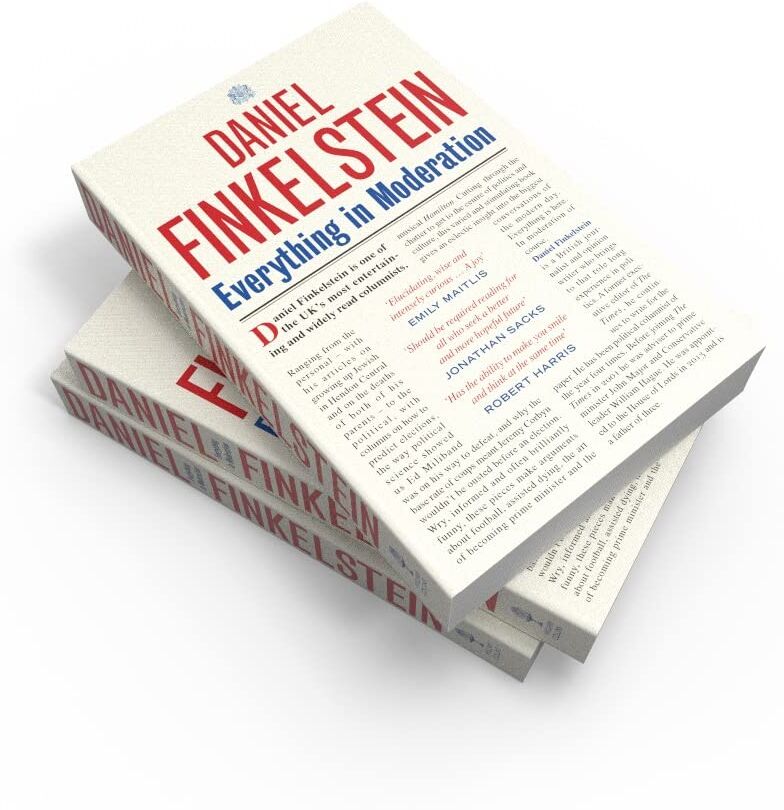
William Collins Everything in Moderation by Daniel Finkelstein - Paperback - Best Times Columns on Politics, Culture & Life - Non Fiction Gift BookEverything in Moderation gathers the best of Daniel Finkelstein's Times columns into one satisfying paperback. Spanning politics, culture, history, and everyday life, Finkelstein writes with warmth, wit, and intelligence. Whether dissecting election results, defending suburban life, or reflecting on his family history, every piece is a masterclass in clear thinking. This book is perfect for those who enjoy thoughtful, funny, and humane journalism, making it great for dipping into again and again. Daniel Finkelstein is a widely read newspaper columnist, and this collection showcases his writing skills. The pieces here range across a broad range of subjects, including predicting elections, the political science behind Ed Miliband's defeat, and the base rate of coups.6,49 £*Shipping: 2,99 £Secure redirect to the provider
-
All Categories Goods Radio Button Decals, Vinyl Stickers For Radio Control Button Repair, Black Set Radio Button Decals, Vinyl Stickers For Radio Control Button Repair, Black SetUpgrade Your Radio Control Buttons with HighQuality Repair Decals! Bring new life to your wornout radio control buttons with our Radio Button Repair Decals. Crafted from highquality vinyl, this 21piece set provides an affordable and practical...37,97 $*Shipping: 0,00 $Secure redirect to the provider
-
Politics On the Edge Rory Stewart, Politics A Survivor’s Guide Rafael Behr booksDescription. Politics On the Edge: From the host of hit podcast The Rest Is Politics. Over the course of a decade from 2010, Rory Stewart went from being a political outsider to standing for prime minister - before being sacked from a Conservative Party that he had come to barely recognise. Tackling ministerial briefs on flood response and prison violence, engaging with conflict and poverty abroad as a foreign minister, and Brexit as a Cabinet minister, Stewart learned first-hand how profoundly hollow our democracy and government had become. Cronyism, ignorance and sheer incompetence ran rampant. Around him, individual politicians laid the foundations for the political and economic chaos of today. Stewart emerged battered but with a profound affection for his constituency of Penrith and the Border, and a deep direct insight into the era of populism and global conflict. Uncompromising, candid and darkly humorous, Politics On the Edge is his story of the challenges, absurdities and realities of political life and a remarkable portrait of our age.. Politics: A Survivor’s Guide: How to Stay Engaged without Getting Enraged. We live in an age of fury and confusion. A new crisis erupts before the last one has finished: financial crisis, Brexit, pandemic, war in Ukraine, inflation, strikes. Prime Ministers come and go but politics stays divided and toxic.It is tempting to switch off the news, tune out and hope things will get back to normal. Except, this is the new normal, and our democracy can only work if enough people stay engaged without getting enraged. But how?To answer that question, award-winning journalist Rafael Behr takes the reader on a personal journey from despair at the state of politics to hope that there is a better way of doing things, with insights drawn from three decades as a political commentator and foreign correspondent.. Title. Politics On the Edge Rory Stewart, Politics A Survivor’s Guide Rafael Behr books. Delivery. Content. Reviews99,99 £*Shipping: 0,00 £Secure redirect to the provider



-
What is the accumulated equity?
The accumulated equity is the total value of an asset after subtracting any liabilities or debts associated with it. It represents the ownership interest or value that an individual or entity has in the asset. Accumulated equity can increase over time as the asset appreciates in value or as debts are paid off, resulting in a higher net worth for the owner. It is an important measure of financial health and can be used to determine the overall value of an investment or property. **
-
'Equity type or legal type?'
Equity type refers to the ownership structure of a company, indicating whether it is publicly traded or privately held. Legal type, on the other hand, refers to the legal structure of a business entity, such as a corporation, partnership, or sole proprietorship. While equity type focuses on ownership, legal type is concerned with the legal rights and responsibilities of the entity. Both equity type and legal type are important considerations when determining the structure and governance of a business. **
-
How do you calculate equity?
Equity is calculated by subtracting the total liabilities of a company from its total assets. The formula for calculating equity is: Equity = Total Assets - Total Liabilities. This calculation gives a measure of the ownership interest in a company, representing the residual value of the assets after all debts and liabilities have been paid off. Equity is an important financial metric that is used to assess the financial health and stability of a company. **
-
How can one improve equity?
One can improve equity by addressing systemic barriers and biases that contribute to inequality. This can be achieved through policies and practices that promote equal access to opportunities, resources, and representation for all individuals, regardless of their background. Additionally, promoting diversity and inclusion in all aspects of society can help to create a more equitable environment. It is also important to actively listen to and amplify the voices of marginalized communities in decision-making processes. **


How does depreciation affect equity?
Depreciation reduces the value of assets on the balance sheet, which in turn reduces the overall equity of the company. This is because equity is calculated as the difference between a company's assets and liabilities. As the value of assets decreases due to depreciation, the overall equity of the company also decreases. This can impact the financial health of the company and its ability to attract investors or secure financing. **
What is the difference between equal opportunities, equity of opportunity, and equity of achievement?
Equal opportunities refers to the idea that everyone should have the same access to opportunities, resources, and rights regardless of their background or circumstances. Equity of opportunity goes a step further, aiming to ensure that everyone has the support and resources they need to have an equal chance of success, taking into account individual differences and barriers. Equity of achievement focuses on ensuring that everyone has the same chance of achieving success, regardless of their starting point, and aims to address and eliminate disparities in outcomes. In summary, while equal opportunities focuses on access, equity of opportunity and equity of achievement focus on addressing and eliminating disparities in support and outcomes. **
Top-Angebote
Products related to Equity:
-
Authors Equity Superagency: What Could Possibly Go Right With Our AI Future - Non Fiction - PaperbackTitle:. Superagency: What Could Possibly Go Right With Our AI Future Format: Paperback Overview:. In Superagency, Reid Hoffman and journalist Greg Beato offer a bold, human-centered vision of an AI-powered future. This accessible non-fiction work reframes the conversation around artificial intelligence—from fear-based headlines to a practical playbook for expanding human agency in the workplace, in governance, and in everyday decision-making. The authors argue that AI can augment our capabilities, not replace them, and they map a road to responsible, creative collaboration between people and machines. The book blends real-world business insight with thoughtful ethical considerations, delivering clear strategies for leaders, teams, and curious readers who want to participate in shaping a positive trajectory. Designed for non-technical audiences as well as seasoned tech watchers, it explains concepts with tangible examples, case studies, and actionable steps that readers can apply immediately. If you’re seeking a hopeful yet grounded take on how AI can amplify opportunity—without surrendering control—this paperback guides you toward a more confident, proactive relationship with technology. A timely read for entrepreneurs, policy-makers, educators, and everyday readers who want to understand what could go right—and how to make it so. What Makes This Book Stand Out:. Superagency stands out by presenting a constructive, agency-forward narrative at a moment when many AI books focus on risk or hype. Hoffman’s credibility as a tech entrepreneur and LinkedIn co‑founder, paired with Beato’s nuanced reporting, yields a balanced, practical blueprint rather than speculative hype. The authors illuminate how individuals and organizations can harness AI to enhance decision-making, creativity, and collaboration, offering concrete frameworks, decision trees, and leadership guidance that readers can translate into real-world action. It’s non-technical in tone but deliberately aspirational, inviting readers to participate in shaping a future where human ingenuity partners with intelligent systems. The book’s emphasis on governance, ethics, and responsible deployment adds depth, making it a compelling choice for readers who want both inspiration and implementable strategies. Who This Book Is Perfect For:. This paperback is ideal for startup founders, business leaders, managers, and teams exploring AI adoption without needing a coding background. It also appeals to policy makers, educators, and students curious about how AI can augment human work rather than erode it. Readers seeking a hopeful, action-oriented take on technology will appreciate the practical guidance, clear language, and accessible examples. If you’re the kind of reader who devours business books, leadership playbooks, or tech-focused non-fiction that translates high-level ideas into everyday decisions, this title will resonate. It also makes a thoughtful gift for colleagues, mentors, or graduates who...22,00 £*Shipping: 2,99 £Secure redirect to the provider
-
Authors Equity The Simple Path to Wealth: Your Road Map to Financial Independence and a Rich, Free Life by J L CollinsWhat if the path to wealth isn't about timing the market or picking hot stocks, or even about paying someone else to do it for you? What if it’s actually about following a radically simple plan that’s not only easier to implement, but also more lucrative than the alternatives? Drawing from fifty years of investing experience, and born out of a series of letters the author wrote to his daughter, The Simple Path to Wealth has become foundational to the FIRE (Financial Independence, Retire Early) movement, inspiring hundreds of thousands of readers to reimagine their relationship with money and freedom. The real-world success of Collins' approach is documented in Pathfinders, his collection of stories from readers who have transformed their financial lives using his method. Whether you care deeply about money, or never want to think about it at all, you’re living in a culture of spending. Everyone’s telling you that handing over your cash for this gadget, this potion, this lifestyle is the key to happiness. Meanwhile, the reality is that happiness is more likely to come from having the financial freedom to live the life you really want. Whatever your relationship with money, you will be heartened by Collins’ essential insight, which is that simplicity beats complexity every time. This comprehensive guide covers everything from debt elimination to optimizing retirement accounts, all while exposing the marketing myths and investment industry practices that keep most people from building real wealth. Collins shares specific, actionable strategies for both wealth-building and wealth-preservation phases, with a straightforward approach to asset allocation that anyone can implement. Collins' direct, often irreverent style makes complex financial concepts crystal clear, giving readers the tools and confidence to take control of their financial future. More than just another investment book, The Simple Path to Wealth is a blueprint for financial independence – showing readers how to break free from the financial industry’s traps and live life on their own terms.12,99 £*Shipping: 2,99 £Secure redirect to the provider
-
William Collins Everything in Moderation by Daniel Finkelstein - Paperback - Best Times Columns on Politics, Culture & Life - Non Fiction Gift BookEverything in Moderation gathers the best of Daniel Finkelstein's Times columns into one satisfying paperback. Spanning politics, culture, history, and everyday life, Finkelstein writes with warmth, wit, and intelligence. Whether dissecting election results, defending suburban life, or reflecting on his family history, every piece is a masterclass in clear thinking. This book is perfect for those who enjoy thoughtful, funny, and humane journalism, making it great for dipping into again and again. Daniel Finkelstein is a widely read newspaper columnist, and this collection showcases his writing skills. The pieces here range across a broad range of subjects, including predicting elections, the political science behind Ed Miliband's defeat, and the base rate of coups.6,49 £*Shipping: 2,99 £Secure redirect to the provider
-
How is equity calculated?
Equity is calculated by subtracting the total liabilities of a company from its total assets. In other words, equity represents the ownership interest in a company's assets after all debts and obligations have been paid off. It is a measure of the company's net worth and is often used by investors and analysts to assess the financial health and value of a company. Equity can also be calculated for individuals by subtracting their total liabilities (such as mortgages, loans, and credit card debt) from their total assets (such as savings, investments, and property). **
-
What is equity capital?
Equity capital refers to the funds that a company raises by selling shares of ownership in the business. These shares represent ownership in the company and entitle the shareholders to a portion of the company's profits and a say in its decision-making processes. Equity capital is a crucial source of long-term funding for a company and can be raised through the sale of common stock or preferred stock. Unlike debt capital, equity capital does not need to be repaid and does not accrue interest, but it does dilute the ownership stake of existing shareholders. **
-
What is the accumulated equity?
The accumulated equity is the total value of an asset after subtracting any liabilities or debts associated with it. It represents the ownership interest or value that an individual or entity has in the asset. Accumulated equity can increase over time as the asset appreciates in value or as debts are paid off, resulting in a higher net worth for the owner. It is an important measure of financial health and can be used to determine the overall value of an investment or property. **
-
'Equity type or legal type?'
Equity type refers to the ownership structure of a company, indicating whether it is publicly traded or privately held. Legal type, on the other hand, refers to the legal structure of a business entity, such as a corporation, partnership, or sole proprietorship. While equity type focuses on ownership, legal type is concerned with the legal rights and responsibilities of the entity. Both equity type and legal type are important considerations when determining the structure and governance of a business. **
Similar search terms for Equity
-
All Categories Goods Radio Button Decals, Vinyl Stickers For Radio Control Button Repair, Black Set Radio Button Decals, Vinyl Stickers For Radio Control Button Repair, Black SetUpgrade Your Radio Control Buttons with HighQuality Repair Decals! Bring new life to your wornout radio control buttons with our Radio Button Repair Decals. Crafted from highquality vinyl, this 21piece set provides an affordable and practical...37,97 $*Shipping: 0,00 $Secure redirect to the provider
-
Politics On the Edge Rory Stewart, Politics A Survivor’s Guide Rafael Behr booksDescription. Politics On the Edge: From the host of hit podcast The Rest Is Politics. Over the course of a decade from 2010, Rory Stewart went from being a political outsider to standing for prime minister - before being sacked from a Conservative Party that he had come to barely recognise. Tackling ministerial briefs on flood response and prison violence, engaging with conflict and poverty abroad as a foreign minister, and Brexit as a Cabinet minister, Stewart learned first-hand how profoundly hollow our democracy and government had become. Cronyism, ignorance and sheer incompetence ran rampant. Around him, individual politicians laid the foundations for the political and economic chaos of today. Stewart emerged battered but with a profound affection for his constituency of Penrith and the Border, and a deep direct insight into the era of populism and global conflict. Uncompromising, candid and darkly humorous, Politics On the Edge is his story of the challenges, absurdities and realities of political life and a remarkable portrait of our age.. Politics: A Survivor’s Guide: How to Stay Engaged without Getting Enraged. We live in an age of fury and confusion. A new crisis erupts before the last one has finished: financial crisis, Brexit, pandemic, war in Ukraine, inflation, strikes. Prime Ministers come and go but politics stays divided and toxic.It is tempting to switch off the news, tune out and hope things will get back to normal. Except, this is the new normal, and our democracy can only work if enough people stay engaged without getting enraged. But how?To answer that question, award-winning journalist Rafael Behr takes the reader on a personal journey from despair at the state of politics to hope that there is a better way of doing things, with insights drawn from three decades as a political commentator and foreign correspondent.. Title. Politics On the Edge Rory Stewart, Politics A Survivor’s Guide Rafael Behr books. Delivery. Content. Reviews99,99 £*Shipping: 0,00 £Secure redirect to the provider
-
Excession (Culture) - A Culture Series Novel by Iain M. Banks - Fiction - PaperbackProduct Details. Title: Excession (Culture) by Iain M. Banks. Condition: BRAND NEW. Format: Paperback. ISBN: 9780356521671 Overview:. Excession is a landmark entry in Iain M. Banks’s expansive Culture saga, celebrated for turning a sweeping space opera into a sharp meditation on power, trust, and the limits of utopia. In this standalone-feeling epic within the Culture universe, a mysterious black-sphere object—an Excession—appears on the frontier of a post-scarcity civilization, triggering an extraordinary contest of wits among diplomats, star-faring minds, and wily human operatives. Banks threads together high-stakes diplomacy, dazzling space battles, and intimate character moments with an almost cinematic tempo. Genar-Hofoen, a capable diplomat from Special Circumstances, navigates fragile alliances while an old flame and the enigmatic Ulver Seich complicate every move. The Excession challenges not only the Culture’s external enemies but the ideology that underpins a society where needs are met and choices are abundant. Fans of cerebral SF and dynamic ensemble storytelling will relish Banks’s wit, moral complexity, and audacious imagination in this quintessential Culture novel. This paperback edition makes a cornerstone of modern science fiction accessible to newcomers and satisfying to long-time readers alike, inviting you to revisit a world where intelligence—human or artificial—outthinks the impossible. What Makes This Novel Special:. Excession stands out even within the Culture canon for its deft balancing of large-scale, panoramic storytelling with deeply personal stakes. The titular artifact acts as a narrative catalyst that accelerates debates about intervention, autonomy, and collective responsibility. Banks deliberately foregrounds the Minds—the sentient starships and habitats that underpin Culture life—exploring how vast intellects negotiate restraint, risk, and moral responsibility when faced with a seemingly insolvable puzzle. The result is a novel that rewards patient readers with layered political maneuvering, witty courtroom-style exchanges, and heart-pounding action that never loses sight of character arcs. It’s a portrait of a society so advanced that questions of power become philosophical puzzles as much as geopolitical maneuvers. For readers who crave intelligent speculative fiction with thematic depth, Excession delivers both the thought-provoking ideas and the gripping, page-turning propulsion that redefine what a space opera can be. About the Author:. Iain M. Banks (1954–2013) is widely regarded as one of the most influential figures in contemporary science fiction. Writing under the name Iain M. Banks for his SF novels, he created the Culture series—vast, humanistic adventures set in a post-scarcity future where AI Minds govern starships and human passion meets galactic scale. Banks’s career began with The Wasp Factory (1984) and gained international acclaim with Consider Phlebas (1987), the first Culture novel. His work...99,99 £*Shipping: 0,00 £Secure redirect to the provider
-
Daniel Coyle Collection 3 Books Set Talent Code, Culture Code, Culture PlaybookDescription:. Condition: BRAND NEW. Format: Paperback. The Talent Code: Greatness isn't born. It's grown. In The Talent Code, award-winning journalist Daniel Coyle draws on cutting-edge research to reveal that, far from being some abstract mystical power fixed at birth, ability really can be created and nurtured.In the process, he considers talent at work in venues as diverse as a music school in Dallas and a tennis academy near Moscow to demonstrate how the wiring of our brains can be transformed by the way we approach particular tasks. He explains what is really going on when apparently unremarkable people suddenly make a major leap forward. He reveals why some teaching methods are so much more effective than others. Above all, he shows how all of us can achieve our full potential if we set about training our brains in the right way..... The Culture Code: The Secrets of Highly Successful Groups. The Culture Code reveals the secrets of some of the best teams in the world - from Pixar to Google to US Navy SEALs - explaining the three skills such groups have mastered in order to generate trust and a willingness to collaborate. Combining cutting-edge science, on-the-ground insight and practical ideas for action, it offers a roadmap for creating an environment where innovation flourishes, problems get solved, and expectations are exceeded..... The Culture Playbook: 60 Highly Effective Actions to Help Your Group Succeed.... What is great culture made of? How do you get more of it, or turn around a group that needs improving? In The Culture Playbook, Daniel Coyle delivers a field-tested guide for building strong, cohesive, high-performing groups.Coyle, author of the New York Times bestselling The Culture Code, has spent the last six years studying and consulting with some of the most successful groups on the planet - including Pixar, Navy SEALS Team 6 and others. Here, he distils his findings into 60 concise, actionable, scientifically proven tips for building safety, generating trust, and establishing purpose - plus a set of conversation-igniting exercises to help you assess and improve your current culture.The result is a book that will sharpen the skills of any leader and strengthen the cohesion of any team - because it demonstrates that great culture is not controlled by fate or luck; it's controlled by you..... Title. Daniel Coyle Collection 3 Books Set Talent Code, Culture Code,Culture Playbook. Delivery. Content. Reviews30,99 £*Shipping: 2,99 £Secure redirect to the provider
-
How do you calculate equity?
Equity is calculated by subtracting the total liabilities of a company from its total assets. The formula for calculating equity is: Equity = Total Assets - Total Liabilities. This calculation gives a measure of the ownership interest in a company, representing the residual value of the assets after all debts and liabilities have been paid off. Equity is an important financial metric that is used to assess the financial health and stability of a company. **
-
How can one improve equity?
One can improve equity by addressing systemic barriers and biases that contribute to inequality. This can be achieved through policies and practices that promote equal access to opportunities, resources, and representation for all individuals, regardless of their background. Additionally, promoting diversity and inclusion in all aspects of society can help to create a more equitable environment. It is also important to actively listen to and amplify the voices of marginalized communities in decision-making processes. **
-
How does depreciation affect equity?
Depreciation reduces the value of assets on the balance sheet, which in turn reduces the overall equity of the company. This is because equity is calculated as the difference between a company's assets and liabilities. As the value of assets decreases due to depreciation, the overall equity of the company also decreases. This can impact the financial health of the company and its ability to attract investors or secure financing. **
-
What is the difference between equal opportunities, equity of opportunity, and equity of achievement?
Equal opportunities refers to the idea that everyone should have the same access to opportunities, resources, and rights regardless of their background or circumstances. Equity of opportunity goes a step further, aiming to ensure that everyone has the support and resources they need to have an equal chance of success, taking into account individual differences and barriers. Equity of achievement focuses on ensuring that everyone has the same chance of achieving success, regardless of their starting point, and aims to address and eliminate disparities in outcomes. In summary, while equal opportunities focuses on access, equity of opportunity and equity of achievement focus on addressing and eliminating disparities in support and outcomes. **
* All prices are inclusive of VAT and, if applicable, plus shipping costs. The offer information is based on the details provided by the respective shop and is updated through automated processes. Real-time updates do not occur, so deviations can occur in individual cases. ** Note: Parts of this content were created by AI.