Buy cbc.li ?
We are moving the project
cbc.li .
Are you interested in purchasing the domain
cbc.li ?
domain@kv-gmbh.de · 0541-91531010
Buy cbc.li ?
Which countries broadcast on regular radio?
Many countries around the world broadcast on regular radio, including the United States, Canada, the United Kingdom, Australia, Germany, Japan, and many others. These countries have a wide variety of radio stations that cater to different interests and demographics, including music, news, talk shows, and more. Regular radio remains a popular and accessible medium for broadcasting information and entertainment to the public. **
Which culture is most similar to German culture, excluding the following countries?
The culture most similar to German culture, excluding the neighboring countries of Austria, Switzerland, and the Netherlands, would likely be Scandinavian culture. Countries such as Denmark, Sweden, and Norway share similarities with German culture in terms of their strong work ethic, emphasis on punctuality, and love for outdoor activities. Additionally, they also share similar values in terms of social welfare and a focus on environmental sustainability. These countries also have a similar approach to food and drink, with a love for hearty, traditional dishes and a strong beer culture. **


Similar search terms for Countries
Top-Angebote
Products related to Countries:
-
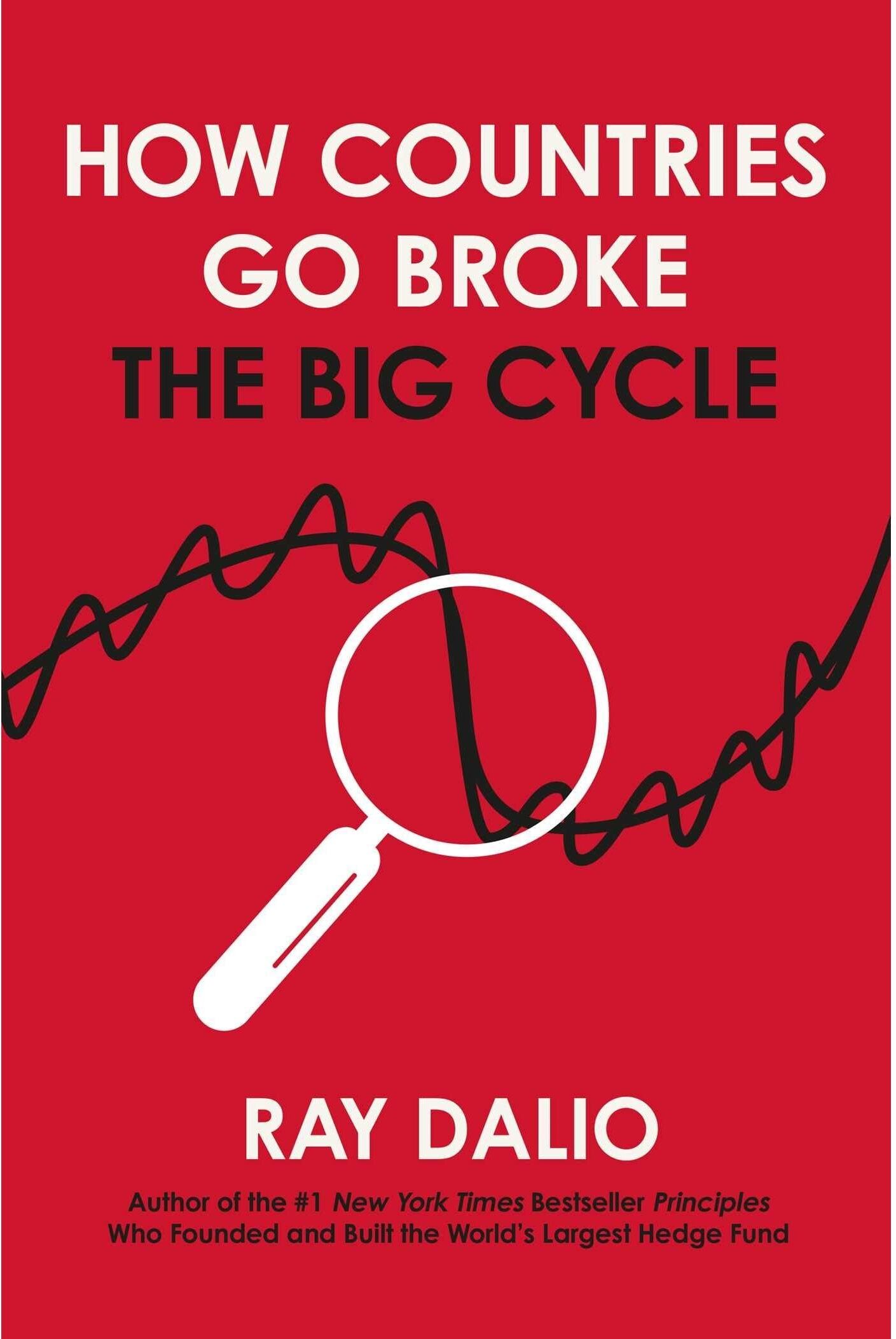
Ray Dalio , Patrick Rayne, Bruce Hood How Countries Go Broke, The One Goal, The Science of Happiness 3 Books Collection SetDescription. Condition: BRAND NEW. Format: Mixed Lot. How Countries Go Broke [Hardcover]:. In this groundbreaking book, Ray Dalio, one of the greatest investors of our time who anticipated the 2008 global financial crisis and the 2010–12 European debt crisis, shares for the first time his detailed explanation of what he calls the 'Big Debt Cycle'. Understanding this cycle is critical for helping policymakers, investors and the general public grasp where we are and where we are headed with the debt issue. Dalio's model points toward surprisingly straightforward solutions for dealing with the debt problems that the US, Europe, Japan and China face today.. The One Goal:. Do you ever feel overwhelmed by your to-do list, constantly busy but getting nowhere? The One Goal is your antidote to modern overload — a practical, no-fluff guide that shows how simplifying your focus can supercharge your success.* What You’ll Learn:✅ The Power of Singular Focus: Discover why chasing too many goals leads to burnout — and how zeroing in on one transforms your results.✅ Declutter Your Mind & Schedule: Learn how to cut out distractions, eliminate mental noise, and create space for deep work.. The Science of Happiness:. We all want to be happier, but our brains often get in the way. When we’re too stuck in our heads we obsess over our inadequacies, compare ourselves with others and fail to see the good in our lives.In The Science of Happiness, world-leading psychologist and happiness expert Bruce Hood demonstrates that the key to happiness is not self-care but connection. He presents seven simple but life-changing lessons to break negative thought patterns and re-connect with the things that really matter.. Title. How Countries Go Broke, The One Goal, The Science of Happiness 3 Books Collection Set. Delivery. Content. Reviews27,99 £*Shipping: 2,99 £Secure redirect to the provider
-
Simon and Schuster UK How Countries Go Broke: Principles for Navigating the Big Debt Cycle, Where We Are Headed, and What We Should DoAn urgent warning about the global economy from Ray Dalio, the #1 New York Times bestselling author of Principles. Do big government debts threaten our collective well-being? Are there limits to debt growth? Can a big, important reserve currency country like the United States really go broke – and what would that look like? For decades, politicians, policymakers and investors have debated these questions, but the answers have eluded them. In this groundbreaking book, Ray Dalio, one of the greatest investors of our time who anticipated the 2008 global financial crisis and the 2010–12 European debt crisis, shares for the first time his detailed explanation of what he calls the 'Big Debt Cycle'. Understanding this cycle is critical for helping policymakers, investors and the general public grasp where we are and where we are headed with the debt issue. Dalio's model points toward surprisingly straightforward solutions for dealing with the debt problems that the US, Europe, Japan and China face today. How Countries Go Broke also shows how these debt problems are related to the other forces – political within countries, geopolitical between countries, natural (droughts, floods and pandemics) and technological (most importantly, AI) – that together are causing what Dalio calls the 'Overall Big Cycle' changes in the world order. By reading this book, you will improve your understanding of what's happening now and what to do about it.17,99 £*Shipping: 2,99 £Secure redirect to the provider
-
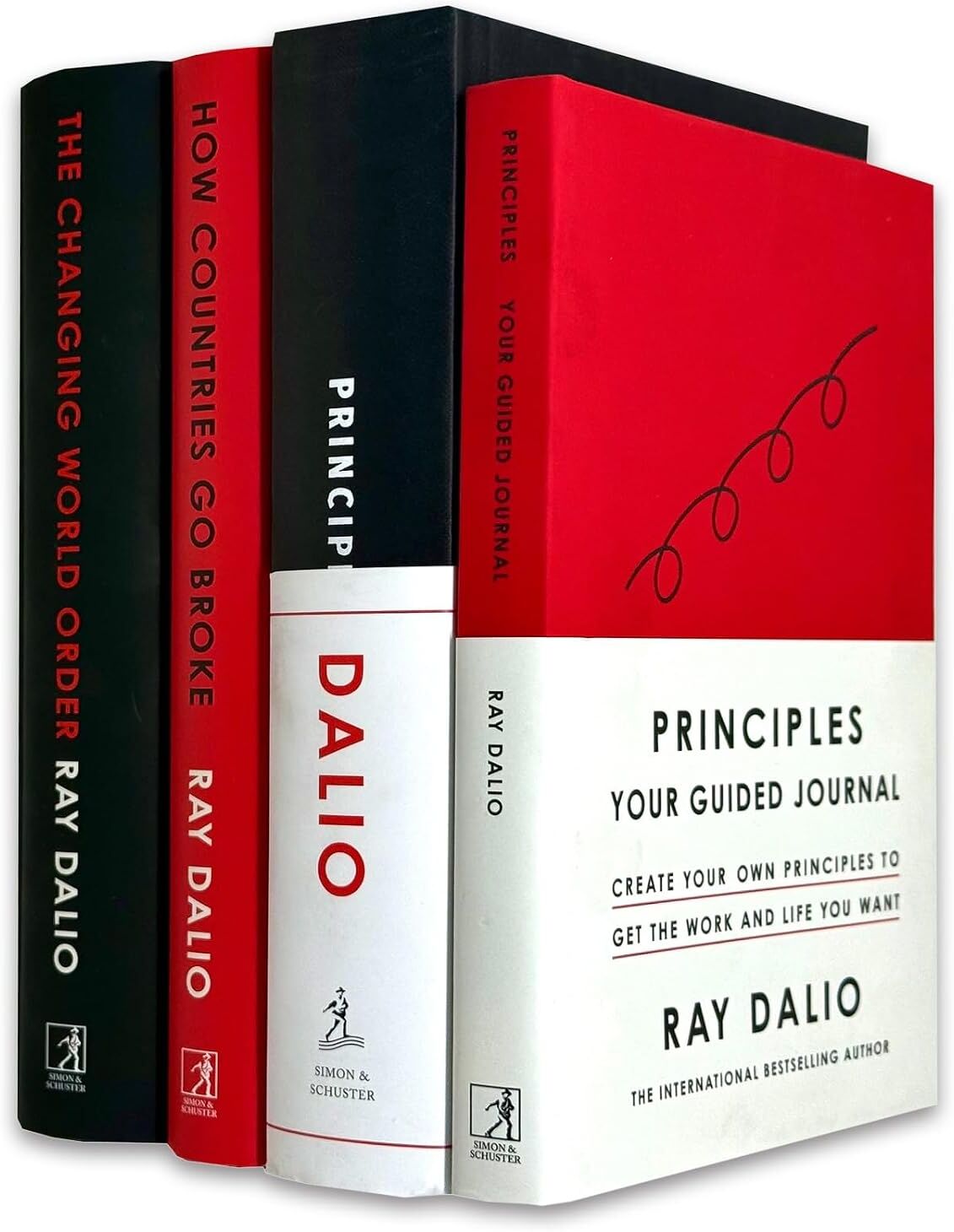
Ray Dalio Collection (Principles: Life and Work, The Changing World Order, How Countries Go Broke & Guided Journal) 4 Books Set - Non Fiction - Hardback Simon & SchusterTitles in this Set: 1. Principles: Life and Work 2. Principles for Dealing with the Changing World Order 3. How Countries Go Broke: The Big Cycle 4. Principles: Your Guided Journal Description: Principles: Life and Work In 1975, Ray Dalio founded an investment firm, Bridgewater Associates, out of his two-bedroom apartment in New York City. Forty years later, Bridgewater has made more money for its clients than any other hedge fund in history and grown into the fifth most important private company in the United States, according to Fortune magazine. Dalio himself has been named to Time magazine’s list of the 100 most influential people in the world. Along the way, Dalio discovered a set of unique principles that have led to Bridgewater’s exceptionally effective culture, which he describes as “an idea meritocracy that strives to achieve meaningful work and meaningful relationships through radical transparency.” It is these principles, and not anything special about Dalio—who grew up an ordinary kid in a middle-class Long Island neighborhood—that he believes are the reason behind his success. In Principles, Dalio shares what he’s learned over the course of his remarkable career. He argues that life, management, economics, and investing can all be systemized into rules and understood like machines. The book’s hundreds of practical lessons, which are built around his cornerstones of “radical truth” and “radical transparency,” include Dalio laying out the most effective ways for individuals and organizations to make decisions, approach challenges, and build strong teams. He also describes the innovative tools the firm uses to bring an idea meritocracy to life, such as creating “baseball cards” for all employees that distill their strengths and weaknesses, and employing computerized decision-making systems to make believability-weighted decisions. While the book brims with novel ideas for organizations and institutions, Principles also offers a clear, straightforward approach to decision-making that Dalio believes anyone can apply, no matter what they’re seeking to achieve. Principles for Dealing with the Changing World Order A few years ago, Ray Dalio noticed a confluence of political and economic conditions he hadn’t encountered before. They included huge debts and zero or near-zero interest rates that led to massive printing of money in the world’s three major reserve currencies; big political and social conflicts within countries, especially the US, due to the largest wealth, political and values disparities in more than 100 years; and the rising of a world power (China) to challenge the existing world power (US) and the existing world order. The last time that this confluence occurred was between 1930 and 1945. This realisation sent Dalio on a search for the repeating patterns and cause/effect relationships underlying all major changes in wealth and power over the last 500 years. In this remarkable and timely addition to his Principles series,...35,99 £*Shipping: 0,00 £Secure redirect to the provider
-
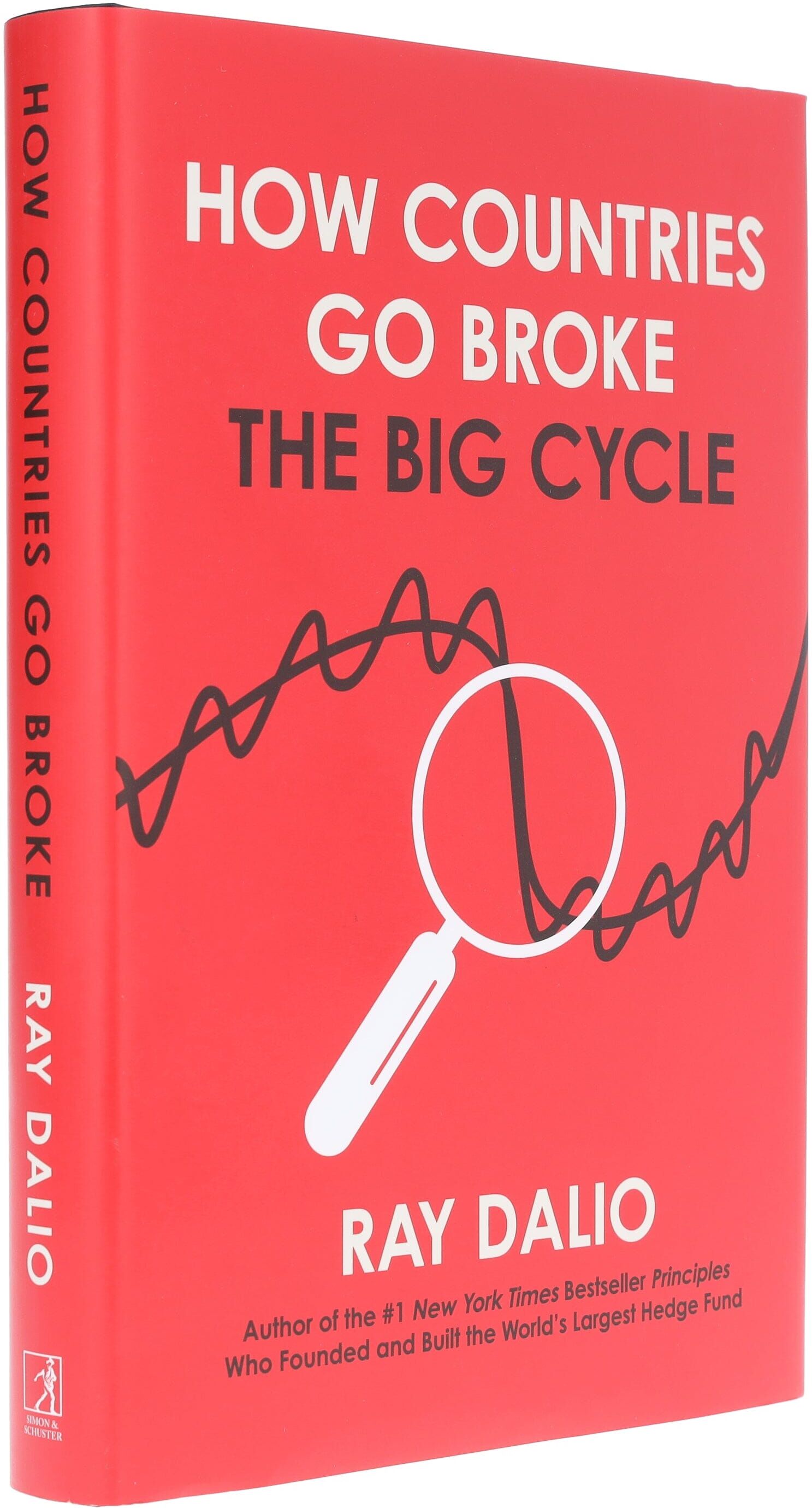
How Countries Go Broke Principles for Navigating the Big Debt Cycle, Where We Are Headed, and What We Should Do by Ray Dalio - Non Fiction - Hardback Simon & SchusterDo big government debts threaten our collective well-being? Are there limits to debt growth? Can a big, important reserve currency country like the United States really go broke – and what would that look like? For decades, politicians, policymakers and investors have debated these questions, but the answers have eluded them. In this groundbreaking book, Ray Dalio, one of the greatest investors of our time who anticipated the 2008 global financial crisis and the 2010–12 European debt crisis, shares for the first time his detailed explanation of what he calls the 'Big Debt Cycle'. Understanding this cycle is critical for helping policymakers, investors and the general public grasp where we are and where we are headed with the debt issue. Dalio's model points toward surprisingly straightforward solutions for dealing with the debt problems that the US, Europe, Japan and China face today. How Countries Go Broke also shows how these debt problems are related to the other forces – political within countries, geopolitical between countries, natural (droughts, floods and pandemics) and technological (most importantly, AI) – that together are causing what Dalio calls the 'Overall Big Cycle' changes in the world order. By reading this book, you will improve your understanding of what's happening now and what to do about it.15,99 £*Shipping: 2,99 £Secure redirect to the provider

-
Which radio stations offer different knowledge, culture, information, and news content?
There are several radio stations that offer a variety of knowledge, culture, information, and news content. For example, NPR (National Public Radio) is known for its in-depth news coverage and cultural programming. BBC World Service provides international news and cultural insights from around the globe. Additionally, local public radio stations often offer a mix of news, cultural programming, and educational content tailored to their communities. **
-
What does table culture look like in four specific countries?
Table culture varies greatly from country to country. In Japan, table culture is highly ritualized, with a focus on presentation and aesthetics. Meals are often served in small, beautifully arranged dishes, and there are specific customs around the use of chopsticks. In Italy, meals are a social event, with a focus on family and community. It is common for multiple generations to gather around the table for a leisurely, multi-course meal. In India, table culture varies by region, but generally, meals are eaten with the hands and shared from communal dishes. There is also a strong emphasis on hospitality and generosity when hosting guests. In the United States, table culture is more informal, with an emphasis on efficiency and convenience. Meals are often eaten quickly, and there is a wide variety of cuisines and dining styles due to the country's diverse population. **
-
How is German television available in European countries?
German television is available in European countries through various means such as satellite, cable, and online streaming services. Many German TV channels are broadcast via satellite and can be accessed with a satellite dish and receiver. Additionally, some cable TV providers in European countries offer German channels as part of their packages. Furthermore, there are online streaming services that offer German TV content to viewers in European countries, allowing them to watch their favorite shows and programs on-demand. **
-
Which countries are Balkan countries?
The Balkan countries are located in the southeastern region of Europe and include Albania, Bosnia and Herzegovina, Bulgaria, Croatia, Greece, Kosovo, Montenegro, North Macedonia, Romania, Serbia, and Slovenia. These countries are characterized by their diverse cultures, histories, and landscapes, and are often considered a bridge between the East and the West. The term "Balkan" is derived from the Balkan Mountains, which run through the region. **

Is politics in so-called democratic countries just a show?
Politics in so-called democratic countries can sometimes be seen as a show, as there are instances where politicians may prioritize their own interests or the interests of powerful groups over the needs of the general population. Additionally, the influence of money and special interests in politics can lead to decisions that do not align with the will of the people. However, it is important to note that democratic countries also have systems in place for citizens to participate in the political process and hold their leaders accountable, which can help ensure that politics is not just a show. Ultimately, the extent to which politics is a show in democratic countries can vary depending on the specific context and the actions of political leaders. **
In which European countries is there no left-wing politics?
There are no European countries where left-wing politics is completely absent. However, some countries have a weaker left-wing presence compared to others. For example, in countries like Hungary and Poland, right-wing parties have gained significant power in recent years, leading to a more conservative political landscape. Nevertheless, left-wing parties and movements still exist and have a presence in these countries, albeit with less influence compared to other European nations. **
Top-Angebote
Products related to Countries:
-
Regula Ysewijn Dark Rye and Honey Cake: Festival baking from the heart of the Low CountriesDescription. From the heart of the Low Countries of northwestern Europe, Belgium has long forged a distinctive culinary identity through its seasonal feasts and festivals. In this follow-up to her internationally lauded Pride and Pudding and Oats in the North, Wheat from the South, Regula Ysewijn turns her attention to the baking traditions of this unique country – the place of her birth.. Title. Dark Rye and Honey Cake: Festival baking from the heart of the Low Countries. Delivery. Content. Reviews99,99 £*Shipping: 0,00 £Secure redirect to the provider
-
Multisell Products Hub Small Automatic Cigarette Rolling Machine, Fully Automatic Household Cigarette Rolling Machine For Multiple Countries redEffortless Cigarette Rolling at Home Experience the convenience of the Fully Automatic Household Cigarette Rolling Machine. Designed for individuals who enjoy rolling their own cigarettes, this machine provides a hasslefree and efficient way to...39,97 $*Shipping: 0,00 $Secure redirect to the provider
-
Ray Dalio , Patrick Rayne, Bruce Hood How Countries Go Broke, The One Goal, The Science of Happiness 3 Books Collection SetDescription. Condition: BRAND NEW. Format: Mixed Lot. How Countries Go Broke [Hardcover]:. In this groundbreaking book, Ray Dalio, one of the greatest investors of our time who anticipated the 2008 global financial crisis and the 2010–12 European debt crisis, shares for the first time his detailed explanation of what he calls the 'Big Debt Cycle'. Understanding this cycle is critical for helping policymakers, investors and the general public grasp where we are and where we are headed with the debt issue. Dalio's model points toward surprisingly straightforward solutions for dealing with the debt problems that the US, Europe, Japan and China face today.. The One Goal:. Do you ever feel overwhelmed by your to-do list, constantly busy but getting nowhere? The One Goal is your antidote to modern overload — a practical, no-fluff guide that shows how simplifying your focus can supercharge your success.* What You’ll Learn:✅ The Power of Singular Focus: Discover why chasing too many goals leads to burnout — and how zeroing in on one transforms your results.✅ Declutter Your Mind & Schedule: Learn how to cut out distractions, eliminate mental noise, and create space for deep work.. The Science of Happiness:. We all want to be happier, but our brains often get in the way. When we’re too stuck in our heads we obsess over our inadequacies, compare ourselves with others and fail to see the good in our lives.In The Science of Happiness, world-leading psychologist and happiness expert Bruce Hood demonstrates that the key to happiness is not self-care but connection. He presents seven simple but life-changing lessons to break negative thought patterns and re-connect with the things that really matter.. Title. How Countries Go Broke, The One Goal, The Science of Happiness 3 Books Collection Set. Delivery. Content. Reviews27,99 £*Shipping: 2,99 £Secure redirect to the provider
-
Simon and Schuster UK How Countries Go Broke: Principles for Navigating the Big Debt Cycle, Where We Are Headed, and What We Should DoAn urgent warning about the global economy from Ray Dalio, the #1 New York Times bestselling author of Principles. Do big government debts threaten our collective well-being? Are there limits to debt growth? Can a big, important reserve currency country like the United States really go broke – and what would that look like? For decades, politicians, policymakers and investors have debated these questions, but the answers have eluded them. In this groundbreaking book, Ray Dalio, one of the greatest investors of our time who anticipated the 2008 global financial crisis and the 2010–12 European debt crisis, shares for the first time his detailed explanation of what he calls the 'Big Debt Cycle'. Understanding this cycle is critical for helping policymakers, investors and the general public grasp where we are and where we are headed with the debt issue. Dalio's model points toward surprisingly straightforward solutions for dealing with the debt problems that the US, Europe, Japan and China face today. How Countries Go Broke also shows how these debt problems are related to the other forces – political within countries, geopolitical between countries, natural (droughts, floods and pandemics) and technological (most importantly, AI) – that together are causing what Dalio calls the 'Overall Big Cycle' changes in the world order. By reading this book, you will improve your understanding of what's happening now and what to do about it.17,99 £*Shipping: 2,99 £Secure redirect to the provider
-
Which countries broadcast on regular radio?
Many countries around the world broadcast on regular radio, including the United States, Canada, the United Kingdom, Australia, Germany, Japan, and many others. These countries have a wide variety of radio stations that cater to different interests and demographics, including music, news, talk shows, and more. Regular radio remains a popular and accessible medium for broadcasting information and entertainment to the public. **
-
Which culture is most similar to German culture, excluding the following countries?
The culture most similar to German culture, excluding the neighboring countries of Austria, Switzerland, and the Netherlands, would likely be Scandinavian culture. Countries such as Denmark, Sweden, and Norway share similarities with German culture in terms of their strong work ethic, emphasis on punctuality, and love for outdoor activities. Additionally, they also share similar values in terms of social welfare and a focus on environmental sustainability. These countries also have a similar approach to food and drink, with a love for hearty, traditional dishes and a strong beer culture. **
-
Which radio stations offer different knowledge, culture, information, and news content?
There are several radio stations that offer a variety of knowledge, culture, information, and news content. For example, NPR (National Public Radio) is known for its in-depth news coverage and cultural programming. BBC World Service provides international news and cultural insights from around the globe. Additionally, local public radio stations often offer a mix of news, cultural programming, and educational content tailored to their communities. **
-
What does table culture look like in four specific countries?
Table culture varies greatly from country to country. In Japan, table culture is highly ritualized, with a focus on presentation and aesthetics. Meals are often served in small, beautifully arranged dishes, and there are specific customs around the use of chopsticks. In Italy, meals are a social event, with a focus on family and community. It is common for multiple generations to gather around the table for a leisurely, multi-course meal. In India, table culture varies by region, but generally, meals are eaten with the hands and shared from communal dishes. There is also a strong emphasis on hospitality and generosity when hosting guests. In the United States, table culture is more informal, with an emphasis on efficiency and convenience. Meals are often eaten quickly, and there is a wide variety of cuisines and dining styles due to the country's diverse population. **
Similar search terms for Countries
-
Ray Dalio Collection (Principles: Life and Work, The Changing World Order, How Countries Go Broke & Guided Journal) 4 Books Set - Non Fiction - Hardback Simon & SchusterTitles in this Set: 1. Principles: Life and Work 2. Principles for Dealing with the Changing World Order 3. How Countries Go Broke: The Big Cycle 4. Principles: Your Guided Journal Description: Principles: Life and Work In 1975, Ray Dalio founded an investment firm, Bridgewater Associates, out of his two-bedroom apartment in New York City. Forty years later, Bridgewater has made more money for its clients than any other hedge fund in history and grown into the fifth most important private company in the United States, according to Fortune magazine. Dalio himself has been named to Time magazine’s list of the 100 most influential people in the world. Along the way, Dalio discovered a set of unique principles that have led to Bridgewater’s exceptionally effective culture, which he describes as “an idea meritocracy that strives to achieve meaningful work and meaningful relationships through radical transparency.” It is these principles, and not anything special about Dalio—who grew up an ordinary kid in a middle-class Long Island neighborhood—that he believes are the reason behind his success. In Principles, Dalio shares what he’s learned over the course of his remarkable career. He argues that life, management, economics, and investing can all be systemized into rules and understood like machines. The book’s hundreds of practical lessons, which are built around his cornerstones of “radical truth” and “radical transparency,” include Dalio laying out the most effective ways for individuals and organizations to make decisions, approach challenges, and build strong teams. He also describes the innovative tools the firm uses to bring an idea meritocracy to life, such as creating “baseball cards” for all employees that distill their strengths and weaknesses, and employing computerized decision-making systems to make believability-weighted decisions. While the book brims with novel ideas for organizations and institutions, Principles also offers a clear, straightforward approach to decision-making that Dalio believes anyone can apply, no matter what they’re seeking to achieve. Principles for Dealing with the Changing World Order A few years ago, Ray Dalio noticed a confluence of political and economic conditions he hadn’t encountered before. They included huge debts and zero or near-zero interest rates that led to massive printing of money in the world’s three major reserve currencies; big political and social conflicts within countries, especially the US, due to the largest wealth, political and values disparities in more than 100 years; and the rising of a world power (China) to challenge the existing world power (US) and the existing world order. The last time that this confluence occurred was between 1930 and 1945. This realisation sent Dalio on a search for the repeating patterns and cause/effect relationships underlying all major changes in wealth and power over the last 500 years. In this remarkable and timely addition to his Principles series,...35,99 £*Shipping: 0,00 £Secure redirect to the provider
-
How Countries Go Broke Principles for Navigating the Big Debt Cycle, Where We Are Headed, and What We Should Do by Ray Dalio - Non Fiction - Hardback Simon & SchusterDo big government debts threaten our collective well-being? Are there limits to debt growth? Can a big, important reserve currency country like the United States really go broke – and what would that look like? For decades, politicians, policymakers and investors have debated these questions, but the answers have eluded them. In this groundbreaking book, Ray Dalio, one of the greatest investors of our time who anticipated the 2008 global financial crisis and the 2010–12 European debt crisis, shares for the first time his detailed explanation of what he calls the 'Big Debt Cycle'. Understanding this cycle is critical for helping policymakers, investors and the general public grasp where we are and where we are headed with the debt issue. Dalio's model points toward surprisingly straightforward solutions for dealing with the debt problems that the US, Europe, Japan and China face today. How Countries Go Broke also shows how these debt problems are related to the other forces – political within countries, geopolitical between countries, natural (droughts, floods and pandemics) and technological (most importantly, AI) – that together are causing what Dalio calls the 'Overall Big Cycle' changes in the world order. By reading this book, you will improve your understanding of what's happening now and what to do about it.15,99 £*Shipping: 2,99 £Secure redirect to the provider
-
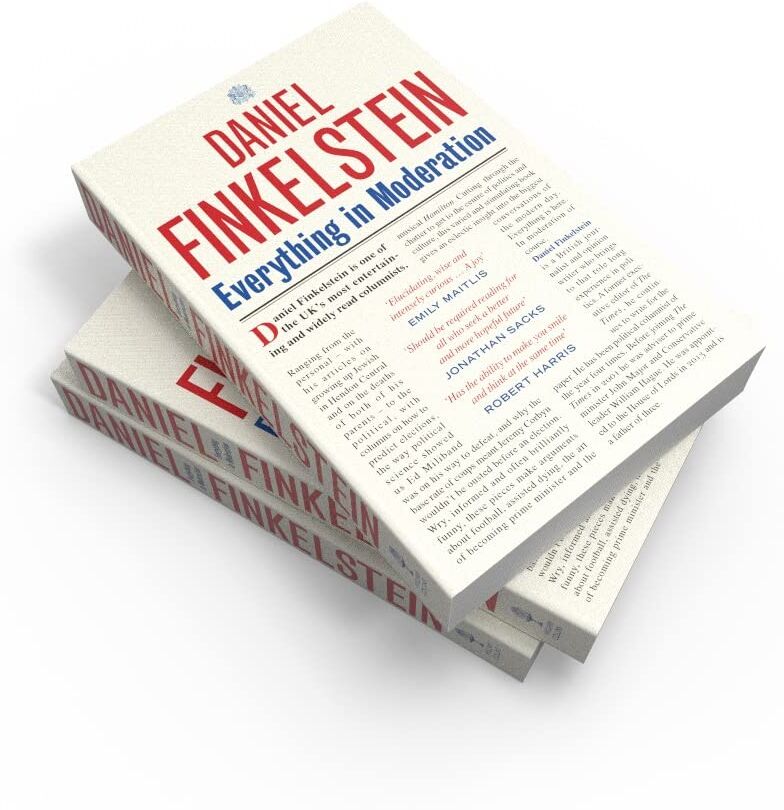
William Collins Everything in Moderation by Daniel Finkelstein - Paperback - Best Times Columns on Politics, Culture & Life - Non Fiction Gift BookEverything in Moderation gathers the best of Daniel Finkelstein's Times columns into one satisfying paperback. Spanning politics, culture, history, and everyday life, Finkelstein writes with warmth, wit, and intelligence. Whether dissecting election results, defending suburban life, or reflecting on his family history, every piece is a masterclass in clear thinking. This book is perfect for those who enjoy thoughtful, funny, and humane journalism, making it great for dipping into again and again. Daniel Finkelstein is a widely read newspaper columnist, and this collection showcases his writing skills. The pieces here range across a broad range of subjects, including predicting elections, the political science behind Ed Miliband's defeat, and the base rate of coups.6,49 £*Shipping: 2,99 £Secure redirect to the provider
-
All Categories Goods Radio Button Decals, Vinyl Stickers For Radio Control Button Repair, Black Set Radio Button Decals, Vinyl Stickers For Radio Control Button Repair, Black SetUpgrade Your Radio Control Buttons with HighQuality Repair Decals! Bring new life to your wornout radio control buttons with our Radio Button Repair Decals. Crafted from highquality vinyl, this 21piece set provides an affordable and practical...37,97 $*Shipping: 0,00 $Secure redirect to the provider
-
How is German television available in European countries?
German television is available in European countries through various means such as satellite, cable, and online streaming services. Many German TV channels are broadcast via satellite and can be accessed with a satellite dish and receiver. Additionally, some cable TV providers in European countries offer German channels as part of their packages. Furthermore, there are online streaming services that offer German TV content to viewers in European countries, allowing them to watch their favorite shows and programs on-demand. **
-
Which countries are Balkan countries?
The Balkan countries are located in the southeastern region of Europe and include Albania, Bosnia and Herzegovina, Bulgaria, Croatia, Greece, Kosovo, Montenegro, North Macedonia, Romania, Serbia, and Slovenia. These countries are characterized by their diverse cultures, histories, and landscapes, and are often considered a bridge between the East and the West. The term "Balkan" is derived from the Balkan Mountains, which run through the region. **
-
Is politics in so-called democratic countries just a show?
Politics in so-called democratic countries can sometimes be seen as a show, as there are instances where politicians may prioritize their own interests or the interests of powerful groups over the needs of the general population. Additionally, the influence of money and special interests in politics can lead to decisions that do not align with the will of the people. However, it is important to note that democratic countries also have systems in place for citizens to participate in the political process and hold their leaders accountable, which can help ensure that politics is not just a show. Ultimately, the extent to which politics is a show in democratic countries can vary depending on the specific context and the actions of political leaders. **
-
In which European countries is there no left-wing politics?
There are no European countries where left-wing politics is completely absent. However, some countries have a weaker left-wing presence compared to others. For example, in countries like Hungary and Poland, right-wing parties have gained significant power in recent years, leading to a more conservative political landscape. Nevertheless, left-wing parties and movements still exist and have a presence in these countries, albeit with less influence compared to other European nations. **
* All prices are inclusive of VAT and, if applicable, plus shipping costs. The offer information is based on the details provided by the respective shop and is updated through automated processes. Real-time updates do not occur, so deviations can occur in individual cases. ** Note: Parts of this content were created by AI.